Company: Scotiabank Caribbean
Role: UX design manager
Scope: Automated Banking Machine (ABM) Experience Redesign
Markets: 9 Caribbean Countries
Scotiabank was rolling out a new generation of intelligent deposit machines across the Caribbean as part of a broader self-service modernization strategy.
This initiative introduced upgraded ABMs capable of envelope-free deposits, improved transaction speed, and expanded functionality. It was an opportunity to modernize the graphical user interface, simplify flows, and empower customers to complete everyday banking tasks independently.
I led the UX redesign of the ABM experience across nine markets, improving legacy flows while introducing new capabilities such as paperless bill payments and envelope-free deposits.
The existing ABM experience was outdated, inconsistent, and not optimized for the new intelligent hardware.
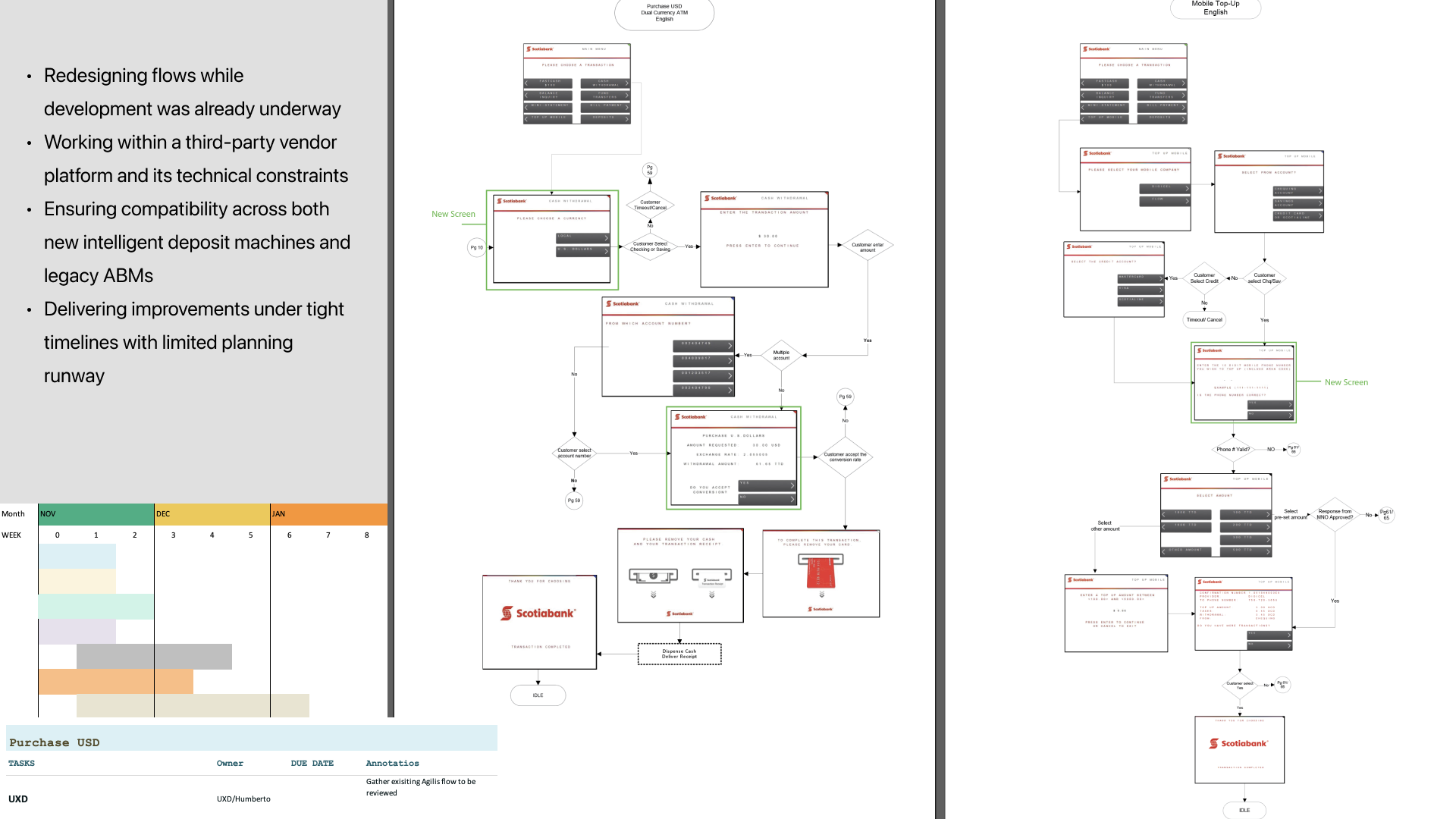
Key challenges included:
The solution needed to work seamlessly across different machine capabilities without fragmenting the customer experience.
Because the design team joined during active development, we had to work reactively while maintaining user-centered principles.
This required balancing brand standards, usability improvements, and platform limitations in real time.
Testing on the actual hardware was critical, as interaction timing, screen glare, button placement, and transaction speed directly influenced usability.
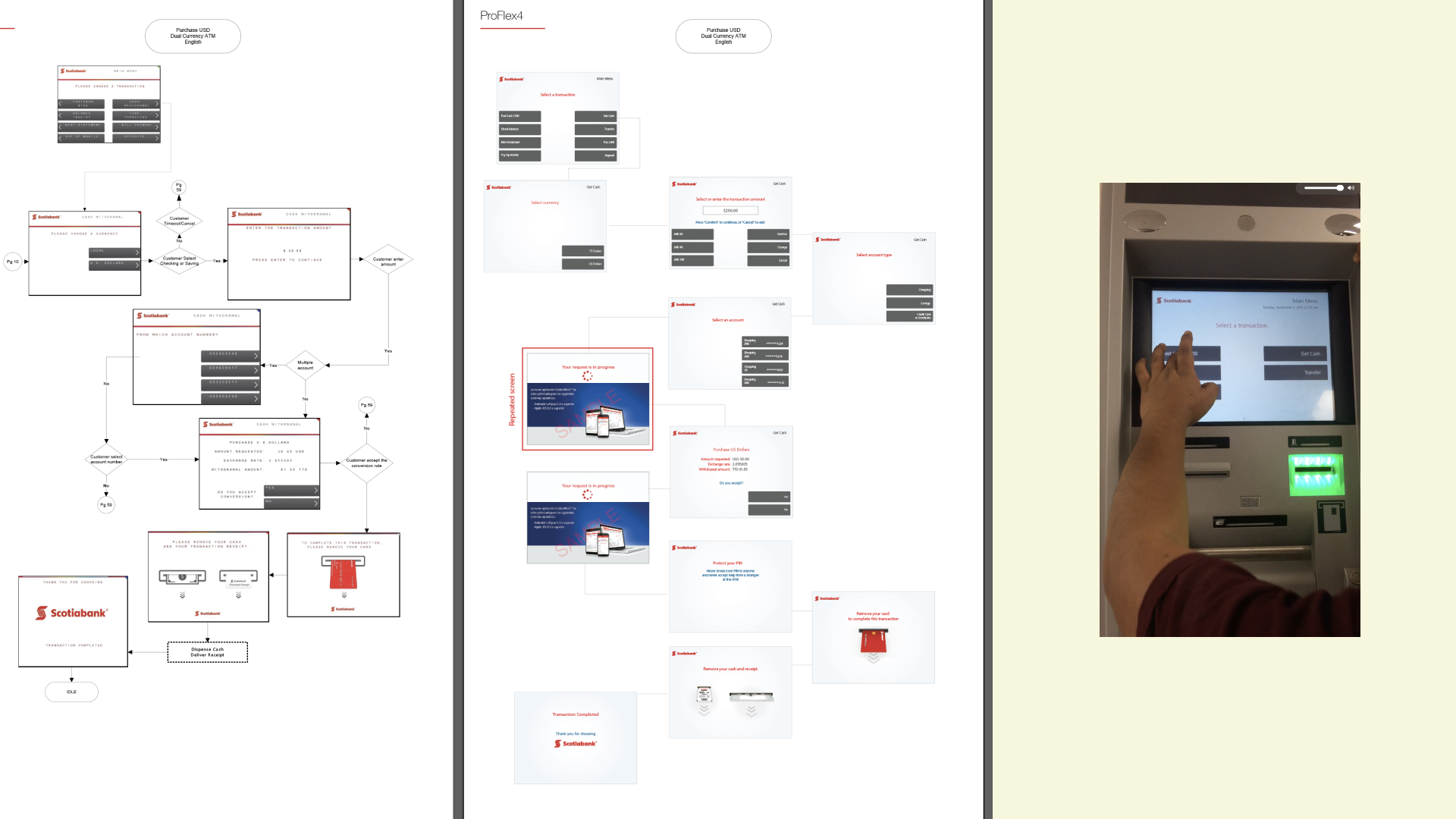
The result was a more intuitive, modern, and scalable self-service banking experience across nine Caribbean markets.
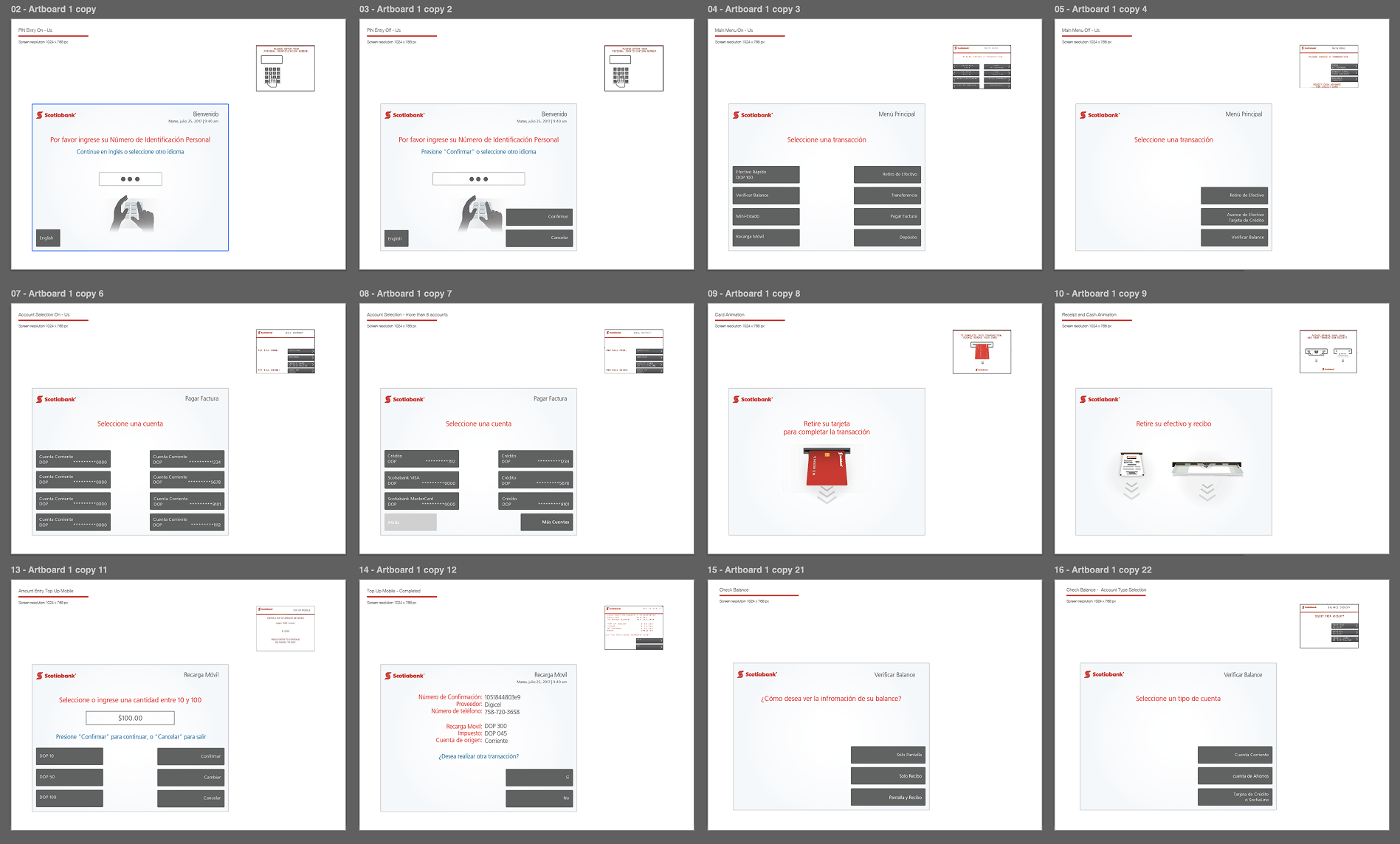
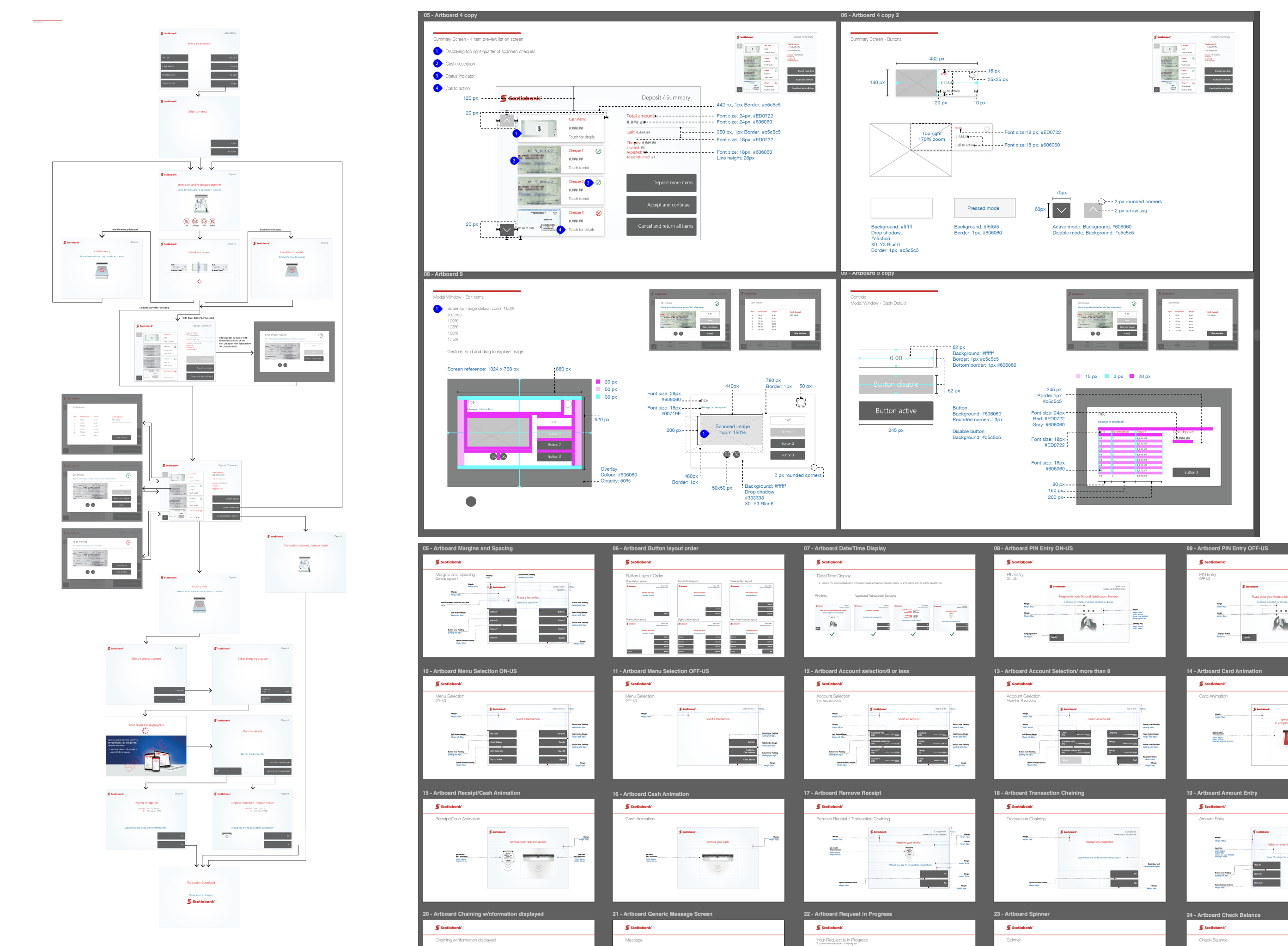
By modernizing both the interface and transaction structure, the new ABM experience supported Scotiabank’s broader regional digital transformation strategy.
Designing for Hardware Requires Precision.
Interaction timing, physical constraints, and machine capabilities fundamentally shape UX decisions.
Constraints Can Drive Clarity.
Working within vendor limitations required simplifying rather than layering complexity.
Cross-Geo Collaboration Demands Structure.
Coordinating across multiple countries and time zones required strong communication and rapid alignment.
User-Centered Design Is Possible Even Under Pressure.
Even in reactive environments, prioritizing clarity and usability improves outcomes.