Company: Amazon (Amazon Flex)
Role: UX Designer II
Scope: Recruiting & Onboarding Improvements WW
Over the past few years, I led global improvements to onboarding and recruiting—including initiatives in Australia—transforming fragmented, manual-heavy processes into scalable in-app infrastructure.
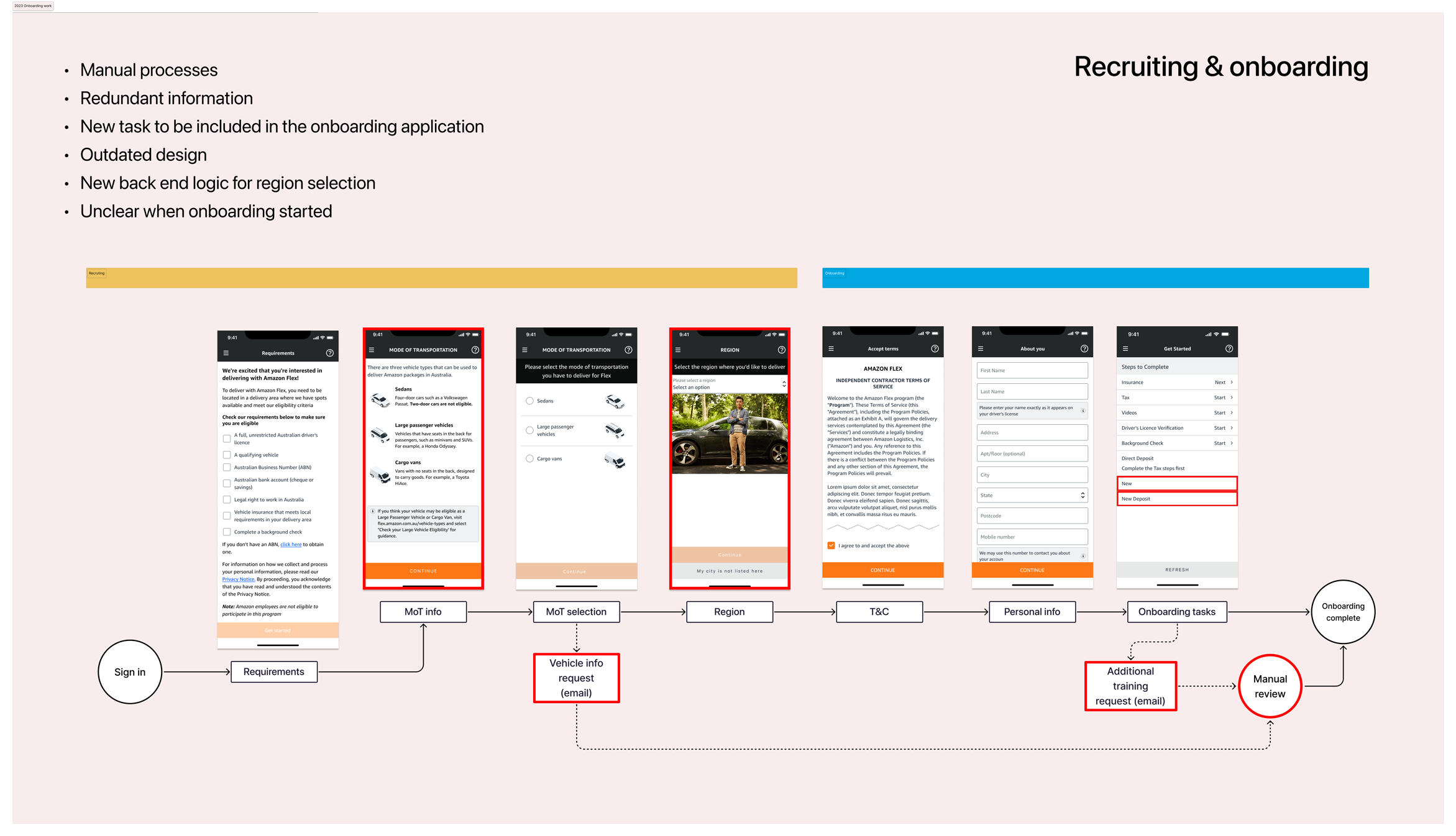
Onboarding in Australia relied on manual coordination, email workflows, outdated UI patterns, and operational workarounds that increased drop-off and turnaround time.
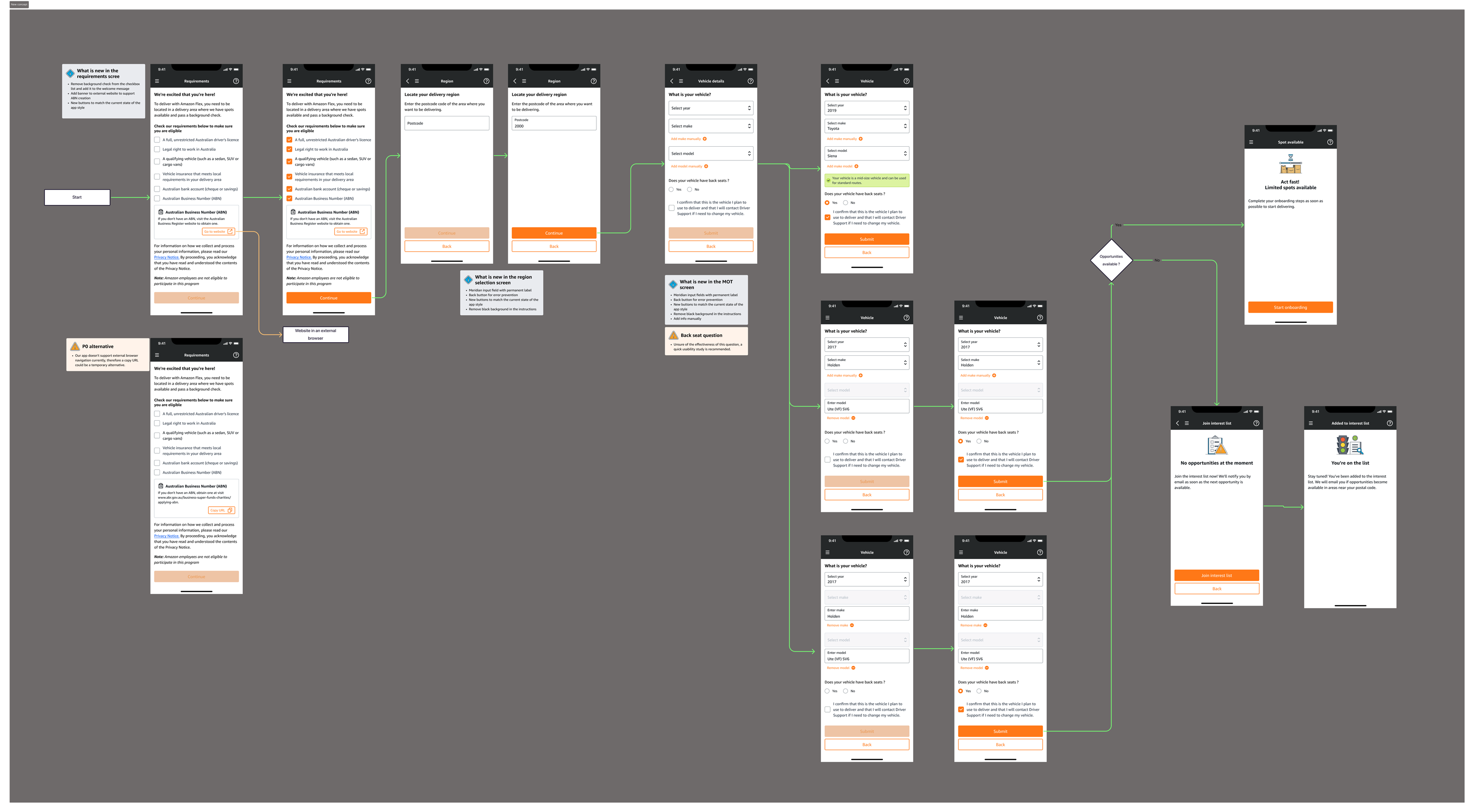
Rather than treating each issue independently, I approached the work as a system redesign — modernizing the UI using the Flex design system, simplifying document submission, reducing duplication, and eliminating manual touchpoints.
Australia historically had one of the lowest onboarding yields internationally.
Structural friction included:
Each workaround increased drop-off, added operational overhead, and extended turnaround time.
The opportunity was not simply to improve individual screens — it was to replace manual coordination with scalable product infrastructure.
The insight: friction was driven not only by regulatory requirements, but by the fragmentation, hidden steps, and unnecessary interaction cost.
Across initiatives, I applied a consistent framework to bring regulatory steps in-app and eliminate manual handoffs.
I migrated outdated UI patterns to the Flex design system to ensure consistency, accessibility, and scalability. This strengthened the onboarding foundation and made future improvements easier to implement.
Throughout, I partnered closely with Product and Engineering to understand constraints and make pragmatic trade-offs. The goal was not to replicate external complexity inside the app, but to simplify it while strengthening long-term infrastructure.
Currently leading improvements to the in-app work eligibility documentation experience to further reduce friction and improve verification clarity using scalable design patterns.
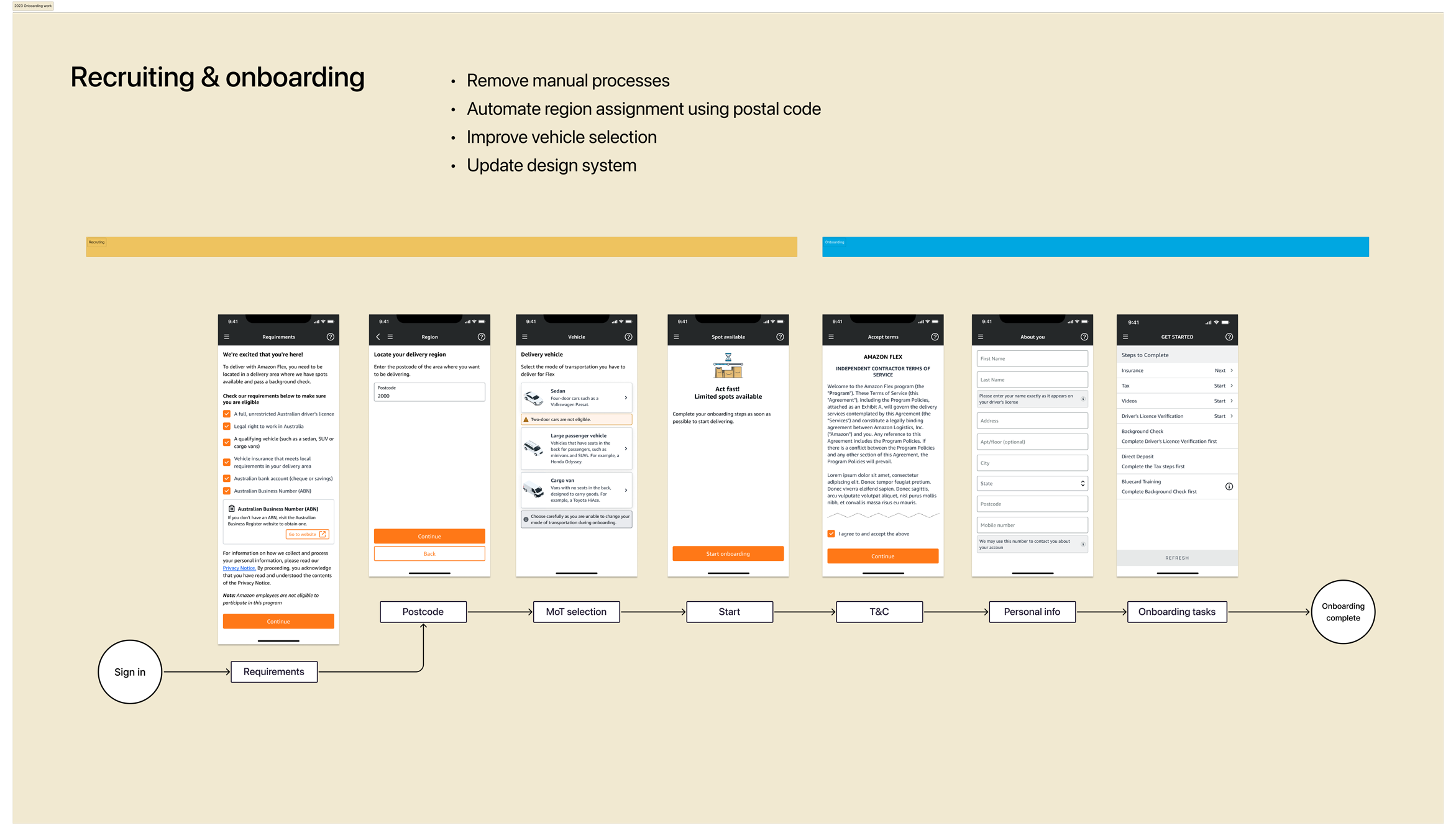
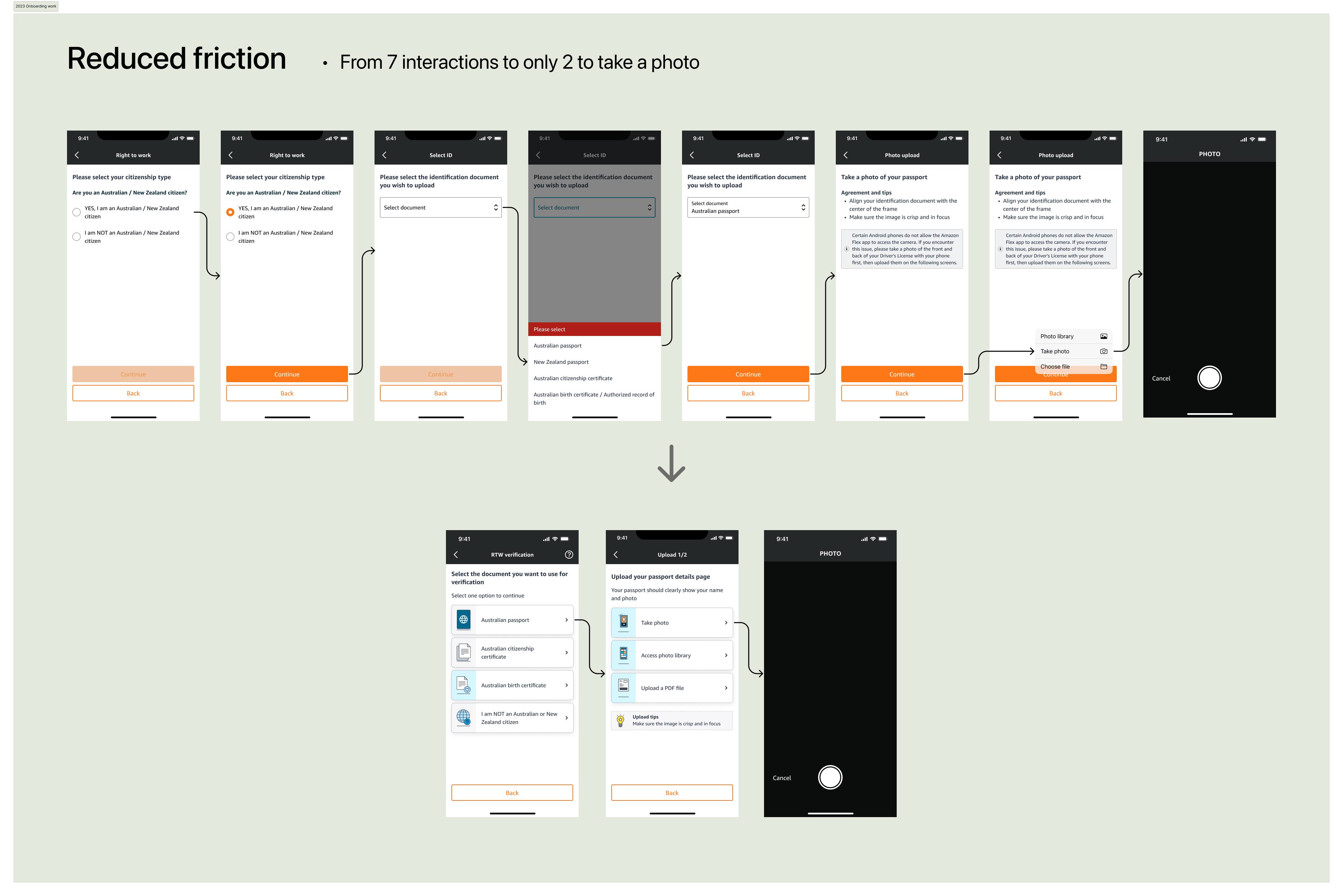
These improvements replaced fragmented manual workflows with scalable in-product infrastructure — improving both driver experience and operational efficiency.
Operational Complexity Is a Product Signal.
Manual coordination often reveals missing product infrastructure.
Modernizing UI Is Strategic.
Design system adoption improves accessibility, consistency, and long-term scalability.
Reducing Interaction Cost Drives Yield.
Fewer taps, clearer validation, and visible progress materially improve completion rates.