Company: Scotiabank
Role: Product Design Lead
Team: Product (PM), Design (Product + Content), Engineering (Tech Lead, FE, QA), AI/ML (Data, ModelOps), Global Contact Centre leadership & frontline advisors
Tools & Methods: UX research, service design, conversation design, prototyping, workshops, analytics
I led the design of an AI-driven conversational banking experience within mobile. The objective was to reduce contact-centre volume while delivering a trusted, always-on support channel.
Rather than designing a chatbot feature, I structured a service layer connecting customers, AI systems, and live advisors.
Customer demand for in-app support surged while contact centres faced high volumes of repeatable inquiries.
Constraints
Without a structured system, chat risked frustrating customers or overwhelming support teams.
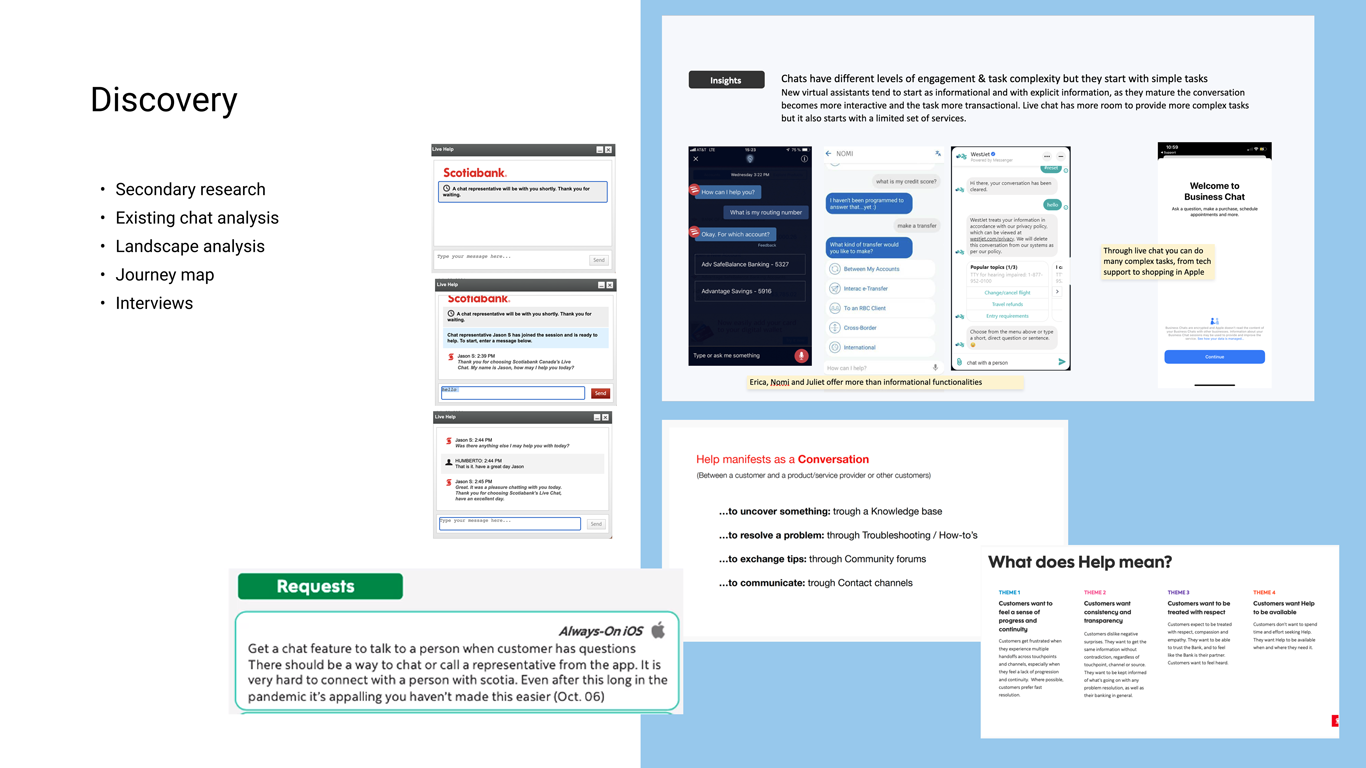
I facilitated extended cross-functional workshops with design, content, AI/ML, engineering, call-centre managers, and frontline staff to identify root causes behind support demand.
These sessions uncovered recurring friction points — transaction confusion, authentication issues, and unclear product states — which directly informed system architecture.
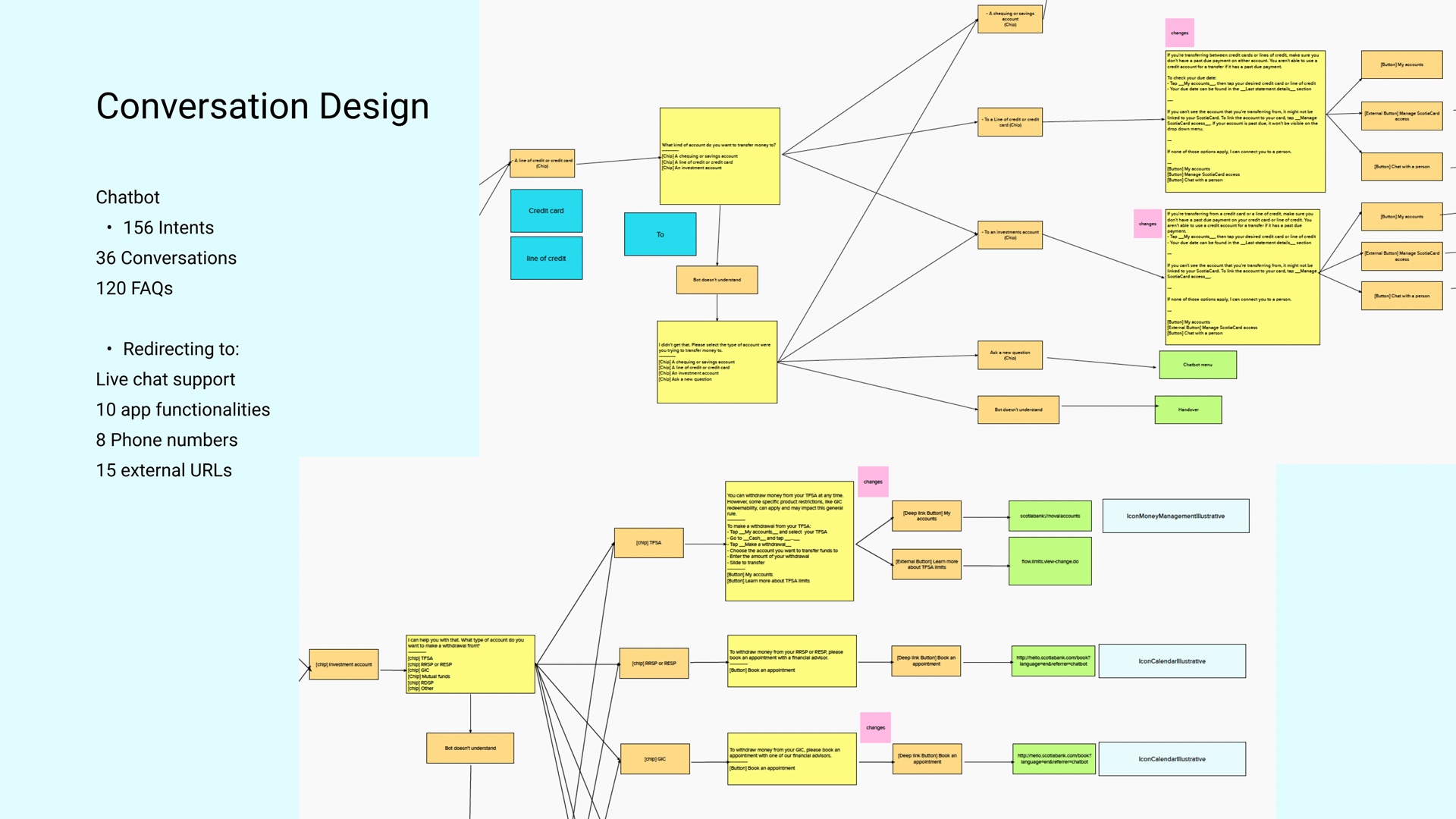
Intent-Based Routing Over Linear Chat
Structured support around resolution outcomes instead of scripted conversations.
Escalation by Confidence
Defined AI thresholds for seamless human transfer before trust degradation.
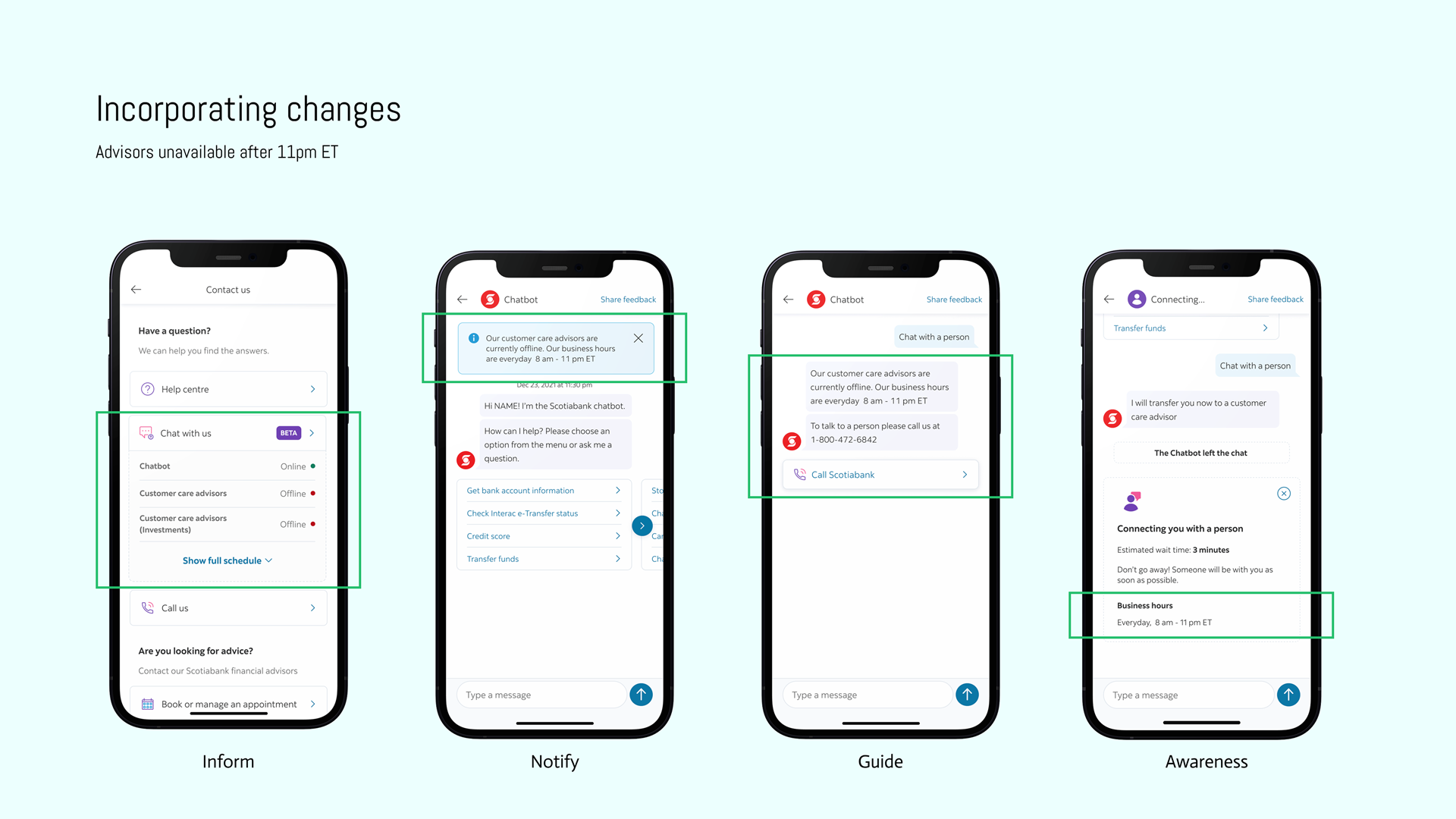
Transparency Over Optimization
Communicated advisor availability clearly to manage expectations.
Chat as Orchestration
Redirected users to product functionality when conversation wasn’t optimal.
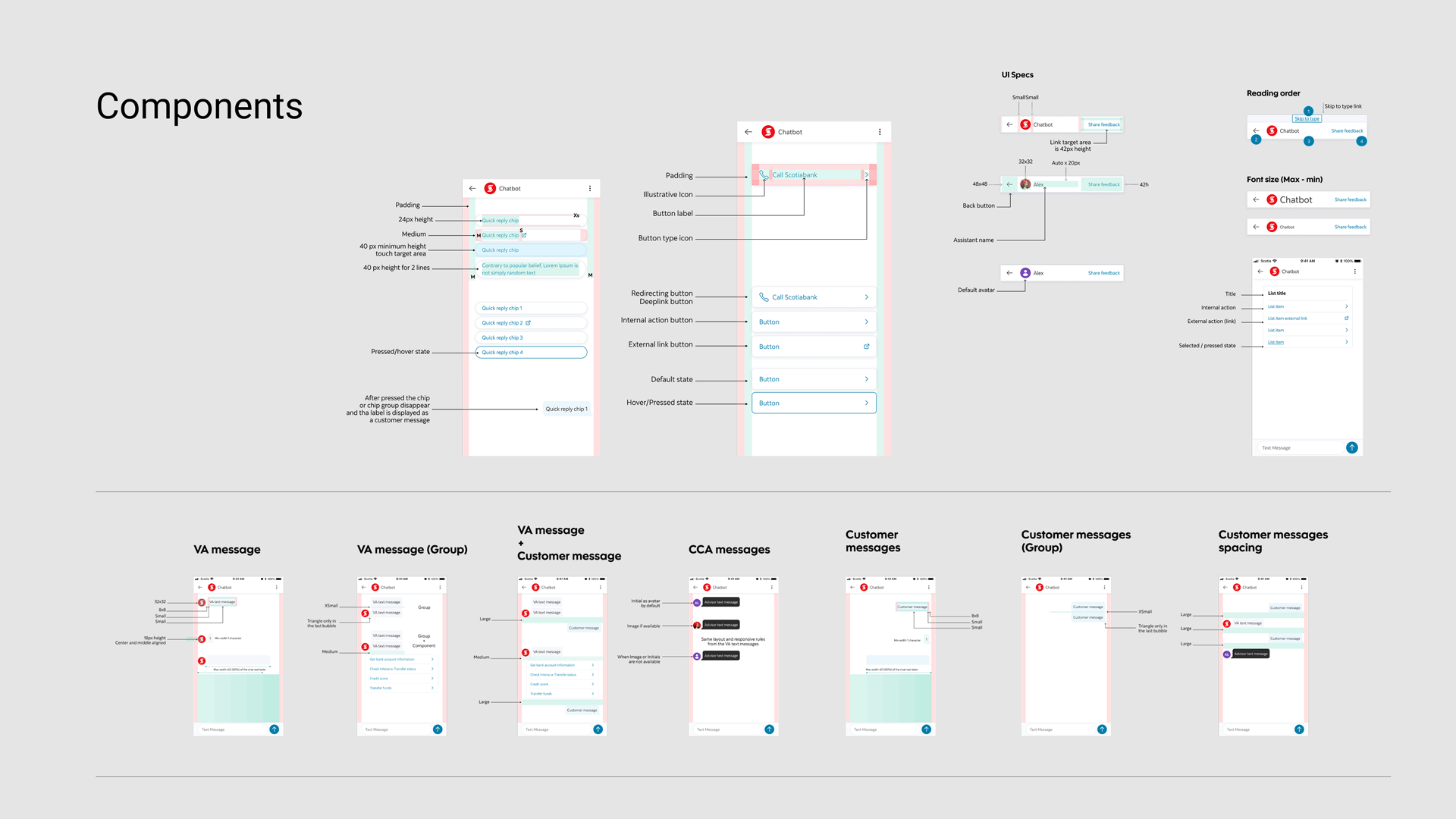
Designed a scalable conversational framework built through sustained collaboration across design, AI/ML, content, engineering, and contact-centre operations.
The chatbot became an orchestration layer across the banking ecosystem rather than a standalone messaging feature.
Customer Outcomes
Operational Outcomes
Conversation Design is Systems Design
Designing chat required aligning AI logic, operational capacity, and customer expectations — not just writing flows.
Trust Drives Automation Acceptance
Customers tolerate automation when escalation is clear and accessible.
Transparency Reduces Friction
Setting expectations about wait times and availability prevented frustration more effectively than optimizing microcopy.
AI Needs Guardrails
Confidence thresholds and fallback patterns are critical to protect both brand and customer trust.